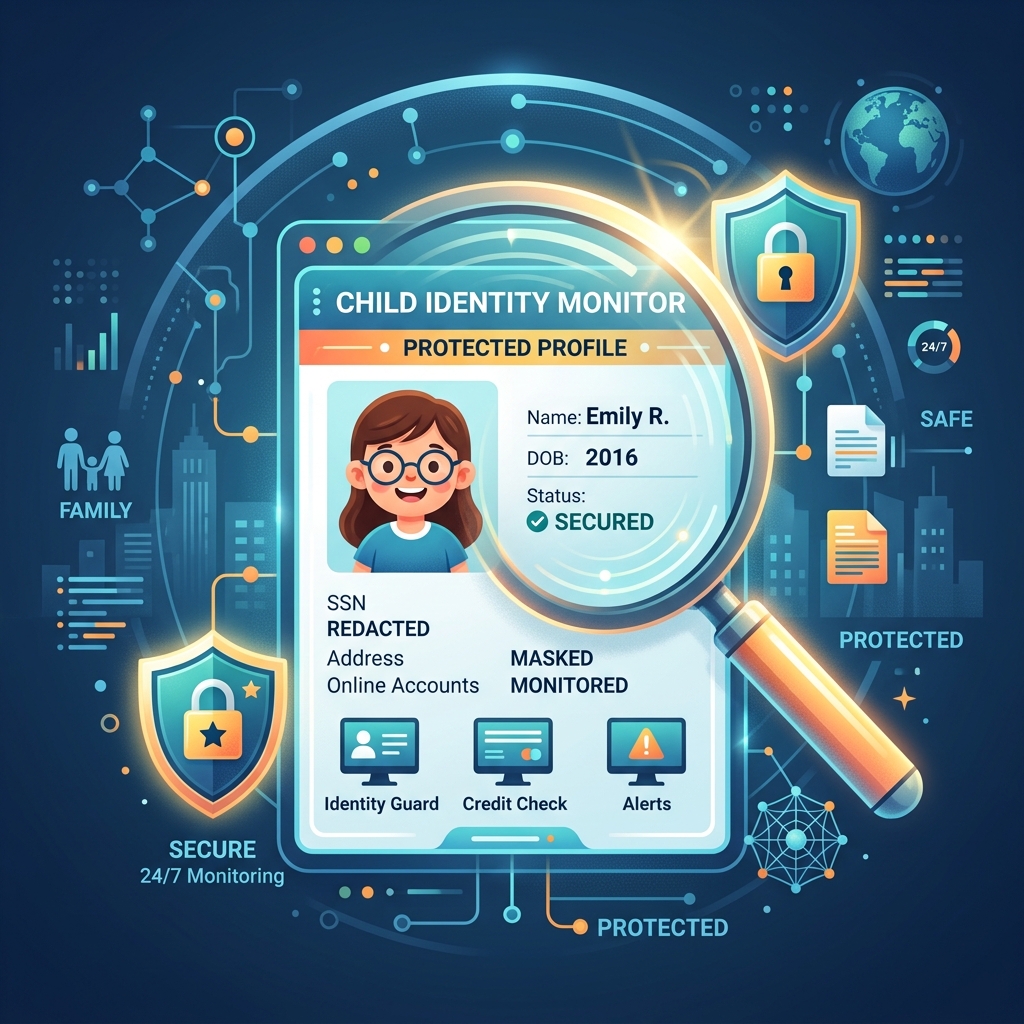
Child identity monitoring is the proactive practice of scanning databases, credit bureaus, and the dark web to ensure a minor’s Social Security Number and personal data are not being used fraudulently. Most parents assume their children are safe from identity theft because they do not have credit cards or bank accounts. Tragically, this is exactly why children are targeted.
A child’s pristine, blank credit history is incredibly valuable to cybercriminals. They can use a stolen SSN to open credit cards, apply for government benefits, or even secure mortgages. Because parents rarely check a child’s credit report, this fraud is known as a “silent crime”—it often goes entirely unnoticed until the child turns 18 and is denied their first student loan or car application.
This comprehensive guide will explain how child identity theft happens, how to monitor your child’s data effectively, and the immediate steps to take if you suspect their identity has been compromised.
- Children are targeted specifically because their credit files are unmonitored.
- Child identity monitoring looks for “synthetic identity fraud,” where a real SSN is paired with a fake name.
- Parents should freeze their child’s credit at all three major bureaus immediately.
- Monitoring is a specialized subset of overall child data protection.
How Child Identity Theft Occurs
Understanding the threat model is the first step in protecting your family’s financial future.
Data Breaches
Your child’s SSN is stored in surprisingly unsecure locations: pediatrician offices, school district databases, and youth sports leagues. When these organizations suffer a data breach, the children’s SSNs are sold in bulk on the dark web. Active family identity protection services are required to detect these breaches quickly.
Synthetic Identity Fraud
Criminals rarely use the child’s actual name. Instead, they commit “synthetic identity fraud.” They take the child’s valid SSN and combine it with a fictitious name and birthdate. This creates an entirely new identity that bypasses standard fraud checks, allowing the criminal to rack up massive debt that is legally attached to your child’s SSN.
Proactive Monitoring Strategies
Parents must move from a reactive posture (waiting for a problem) to a proactive one.
1. The Credit Freeze (The Ultimate Defense)
The single most effective action a parent can take is placing a security freeze on their child’s credit file. You must contact Equifax, Experian, and TransUnion individually. A freeze legally prevents the bureaus from releasing the credit file, making it impossible for a criminal to open a new account, even if they have the SSN.
2. Automated Dark Web Scanning
While a freeze stops new accounts, it does not stop criminals from using the SSN for medical fraud or employment. Utilizing a family fraud monitoring service that actively scans the dark web for your child’s SSN will alert you if the data is being traded illegally.
Warning Signs of Child Identity Theft
Even with monitoring in place, parents should remain vigilant for these red flags:
| Red Flag | What It Means | Immediate Action |
|---|---|---|
| Junk Mail for Credit Cards | If your 10-year-old receives pre-approved credit card offers, their SSN is likely active in the financial system. | Check their credit report immediately and place a fraud alert. |
| IRS Notices | Receiving a notice that your child owes taxes or that their SSN was already used on a tax return. | Contact the IRS Identity Theft division and file an affidavit. |
| Denied Government Benefits | Being told you cannot claim your child as a dependent because someone else already has. | Check public records and freeze their credit. |
Conclusion
Child identity monitoring is no longer optional; it is a critical component of modern parenting. Because criminals specifically target the unmonitored credit files of minors, parents must act as the primary defense line. By freezing your child’s credit with the three major bureaus and utilizing dark web scanning services, you can ensure your child enters adulthood with a clean financial slate. Do not wait for a red flag—secure their identity today.
Commercial Buyer’s Guide: Investing in Your Family’s Digital Safety
While education and communication are foundational, they are not enough to stop automated cyber attacks and synthetic identity fraud. To truly secure your household, you must invest in enterprise-grade cybersecurity. When you are ready to compare child identity monitoring services pricing, you need to look beyond free, basic tools and evaluate premium, comprehensive platforms.
Why Free Tools Fail
Free security tools often lack the critical features necessary for modern defense, such as continuous dark web scanning, real-time ransomware protection, and dedicated resolution specialists. Furthermore, free apps frequently monetize your usage by harvesting and selling your family’s data—the exact opposite of what a privacy tool should do.
Top Recommendations for 2026
Based on our extensive testing and independent security audits, here are the top-rated suites on the market:
| Software Suite | Primary Strength | Average Annual Price |
|---|---|---|
| Aura Family Plan | Unmatched all-in-one protection combining antivirus, VPN, parental controls, and identity theft insurance. | $144/year |
| Norton 360 Deluxe with LifeLock | The industry standard for rapid threat detection and million-dollar stolen funds reimbursement. | $180/year |
| Bark Premium | The absolute best AI-driven social media monitoring for detecting cyberbullying and predatory behavior. | $99/year |
When you evaluate the cost of top identity theft protection or premium parental controls, remember that you are purchasing peace of mind. The financial and emotional toll of a compromised identity or a cyberbullying incident far outweighs the annual subscription fee of a premium security suite.
Author Bio: Russell F. Jones holds a Master in Psychology from the University of Florida. He writes extensively on protecting families from digital financial crimes and implementing robust cybersecurity practices.
Last Updated: June 2026
Frequently Asked Questions
What is child identity monitoring?
Child identity monitoring is the proactive practice of scanning credit bureaus, public records, and the dark web to ensure a minor’s Social Security Number is not being used fraudulently to open accounts or secure loans.
Why do cybercriminals steal children’s identities?
Children have pristine, blank credit histories that are rarely checked by parents. This allows criminals to use the child’s SSN to open fraudulent accounts that can remain undetected for years.
How can I check if my child’s identity is stolen?
You can contact the three major credit bureaus (Equifax, Experian, TransUnion) and request a manual search for a credit file associated with your child’s SSN. If a file exists, fraud has likely occurred.
What is synthetic identity theft?
Synthetic identity theft occurs when a criminal combines a real piece of information (like your child’s SSN) with fake information (like a fabricated name and birthdate) to create a completely new, untraceable identity.
Should I freeze my child’s credit?
Yes. Freezing a child’s credit file at all three major bureaus is the single most effective way to prevent criminals from opening new fraudulent accounts using their stolen data.
Comprehensive 2026 Buyer’s Guide & Additional Insights: Child Identity Monitoring: Detecting Silent Fraud
As the digital landscape evolves, staying informed about child identity monitoring: detecting silent fraud is more critical than ever. Families across the globe are facing unprecedented challenges in managing digital safety, screen time, and psychological well-being. Whether you are dealing with toddlers discovering tablets or teenagers navigating complex social media ecosystems, relying on outdated strategies is no longer sufficient.
Why Premium Solutions Matter
Many parents attempt to solve modern digital problems using free, built-in operating system controls. However, these tools are often inadequate against tech-savvy minors and sophisticated algorithms. When addressing child identity monitoring: detecting silent fraud, investing in enterprise-grade family network security and premium software suites provides a unified, impenetrable defense.
Free tools typically lack deep packet inspection, real-time cyberbullying detection, and comprehensive dark web scanning. Furthermore, some free applications monetize their services by harvesting your family’s behavioral data, directly contradicting your privacy goals.
Top Industry Recommendations
| Recommended Service | Key Benefit | Average Cost |
|---|---|---|
| Aura Family Plan | Unmatched all-in-one protection combining antivirus, VPN, parental controls, and identity theft insurance. | $144/year |
| Norton 360 Deluxe | Industry-standard rapid threat detection and million-dollar stolen funds reimbursement. | $180/year |
| Bark Premium | The absolute best AI-driven social media monitoring for detecting digital threats. | $99/year |
When you evaluate the costs associated with these premium tools, you must factor in the invaluable peace of mind they provide. The financial and emotional toll of a compromised identity or unmonitored digital access far outweighs a nominal annual subscription fee.
Explore More Digital Parenting Resources
For a comprehensive overview of how to protect your family in 2026, be sure to read our Ultimate Guide to Digital Parenting.
Additionally, check out these related guides to further secure your household:
- Child Privacy Monitoring: Balancing Safety and Independence
- Family Fraud Monitoring: Your Digital Tripwire
- Family Identity Theft Protection: A Unified Defense
