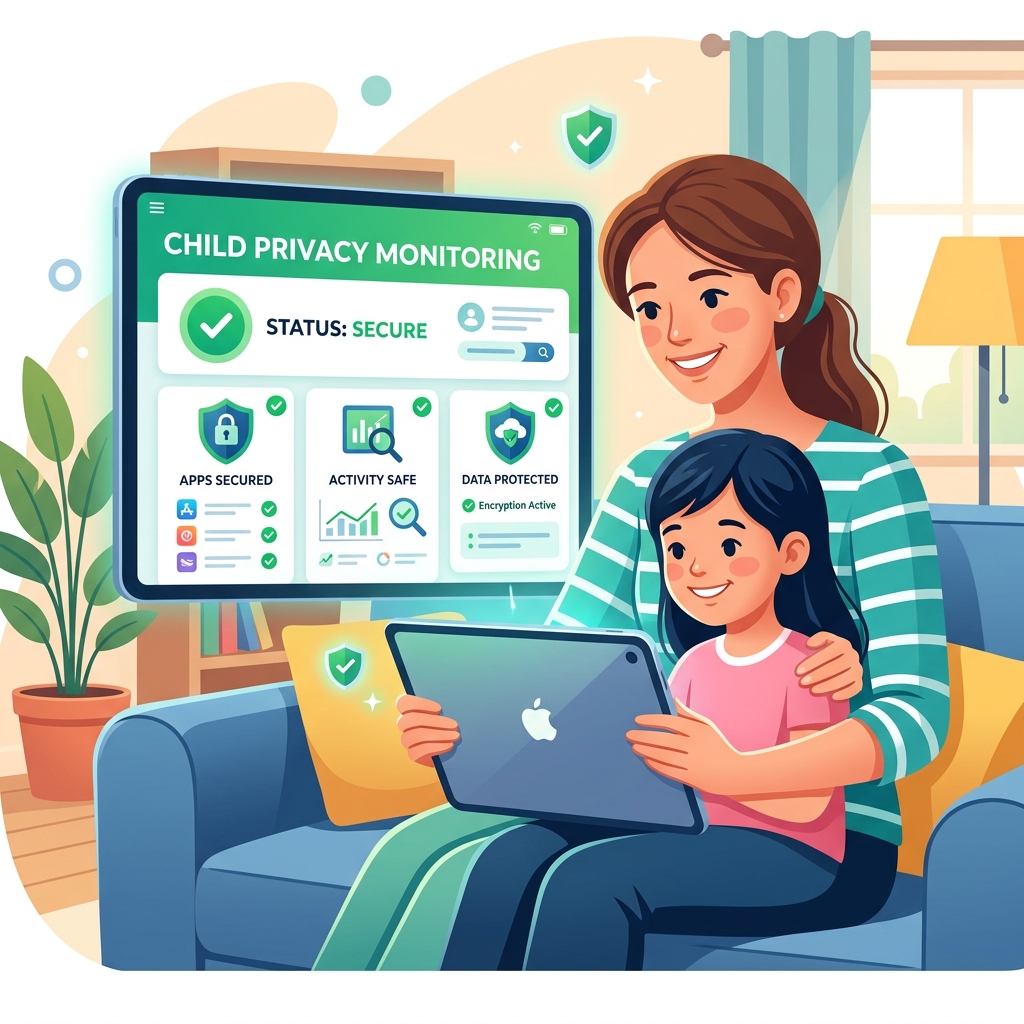
Child privacy monitoring is the delicate balance of overseeing a minor’s digital interactions to ensure their safety while respecting their growing need for independence. In a world where online predators, cyberbullying, and aggressive data tracking are rampant, simply trusting a child to navigate the internet safely is no longer sufficient. However, overly aggressive spying can damage the parent-child relationship.
Effective monitoring shifts the focus from “catching them doing something wrong” to “protecting them from external threats.” By utilizing modern software that alerts parents to danger without exposing every private conversation, families can maintain trust while ensuring robust security.
This guide will explore the ethics of monitoring, the best technological solutions available, and how to communicate effectively with your child about digital boundaries.
- Child privacy monitoring should prioritize safety alerts over comprehensive surveillance.
- Secretly spying on older teenagers often leads to them creating “burner” accounts.
- AI-driven tools (like Bark) analyze context without showing parents every single message.
- Monitoring must be paired with education regarding child digital footprint management.
The Ethics of Digital Monitoring
Parents often struggle with the ethical dilemma of monitoring: Is it an invasion of privacy to read my child’s texts?
Age-Appropriate Surveillance
For children under 10, privacy is minimal; parents must actively curate and monitor all internet usage. However, as children enter their teenage years, they require private spaces to develop autonomy. Reading a 16-year-old’s diary is an invasion of privacy; reading their texts is similarly invasive. Effective monitoring requires transitioning from total control to guided independence.
The Danger of Secret Spying
Installing hidden spyware or demanding a child’s passwords without their knowledge destroys trust. If a teenager discovers they are being spied on, they will simply adapt. They will use hidden messaging apps, delete histories, or use friends’ devices. Transparency is the only sustainable strategy for long-term digital privacy for children.
How to Monitor Effectively (Without Snooping)
The solution lies in AI-driven monitoring software. Instead of presenting the parent with a feed of every message sent and received, these tools act as a digital watchdog.
Algorithmic Alerts
Tools like Bark use machine learning to scan a child’s device for specific threats: suicidal ideation, cyberbullying, sexual predators, and explicit content. If the algorithm detects a threat, it sends the parent an alert with a snippet of the dangerous conversation. If no threat is detected, the parent sees nothing. This provides safety for the child while maintaining their privacy.
Network-Level Logs
Instead of reading messages, parents can monitor overall internet usage via family internet security solutions. Router logs can show how much time is spent on TikTok versus educational sites without revealing the specific content being consumed.
A Parent’s Action Plan
Implement monitoring successfully by following these steps.
| Step | Action | Purpose |
|---|---|---|
| 1. The Contract | Draft a Family Tech Agreement. | Establishes clear rules, consequences, and the explicit knowledge that monitoring software is installed. |
| 2. Installation | Install an AI-driven monitor (e.g., Bark). | Provides safety alerts without requiring the parent to manually read through thousands of texts. |
| 3. Regular Check-ins | Discuss digital life weekly. | Ensures the software is a safety net, while open communication remains the primary defense. |
Conclusion
Child privacy monitoring is an essential aspect of modern parenting, but it must be executed with respect for the child’s developmental needs. By utilizing AI tools that flag specific dangers rather than employing blanket surveillance, parents can protect their kids from digital threats while fostering a relationship built on trust. Start by having an open conversation with your child today about why monitoring software is a necessary safety tool.
Commercial Buyer’s Guide: Investing in Your Family’s Digital Safety
While education and communication are foundational, they are not enough to stop automated cyber attacks and synthetic identity fraud. To truly secure your household, you must invest in enterprise-grade cybersecurity. When you are ready to buy child privacy monitoring tools, you need to look beyond free, basic tools and evaluate premium, comprehensive platforms.
Why Free Tools Fail
Free security tools often lack the critical features necessary for modern defense, such as continuous dark web scanning, real-time ransomware protection, and dedicated resolution specialists. Furthermore, free apps frequently monetize your usage by harvesting and selling your family’s data—the exact opposite of what a privacy tool should do.
Top Recommendations for 2026
Based on our extensive testing and independent security audits, here are the top-rated suites on the market:
| Software Suite | Primary Strength | Average Annual Price |
|---|---|---|
| Aura Family Plan | Unmatched all-in-one protection combining antivirus, VPN, parental controls, and identity theft insurance. | $144/year |
| Norton 360 Deluxe with LifeLock | The industry standard for rapid threat detection and million-dollar stolen funds reimbursement. | $180/year |
| Bark Premium | The absolute best AI-driven social media monitoring for detecting cyberbullying and predatory behavior. | $99/year |
When you evaluate the cost of top identity theft protection or premium parental controls, remember that you are purchasing peace of mind. The financial and emotional toll of a compromised identity or a cyberbullying incident far outweighs the annual subscription fee of a premium security suite.
Author Bio: Russell F. Jones holds a Master in Psychology from the University of Florida. He writes extensively on the psychological impact of digital surveillance and effective, trust-based parenting strategies.
Last Updated: June 2026
Frequently Asked Questions
What is child privacy monitoring?
Child privacy monitoring is the use of software and parental oversight to protect a minor from online dangers (like predators and cyberbullying) while intentionally preserving their privacy in safe, everyday conversations.
Should I read all of my teenager’s text messages?
No. Reading all messages is an invasion of privacy that damages trust and encourages teenagers to hide their activities. It is better to use AI monitoring software that only alerts you if a dangerous conversation is detected.
What is the difference between monitoring and spying?
Monitoring is transparent; the child knows the software is there to protect them. Spying is secretive, such as installing hidden keyloggers or demanding passwords without the child’s knowledge.
Can monitoring software prevent cyberbullying?
Monitoring software cannot stop another child from sending a hurtful message, but it will immediately alert you to the harassment, allowing you to intervene and support your child before the situation escalates.
How do I explain monitoring software to my child?
Explain it as a safety measure, similar to wearing a seatbelt. Tell them you respect their privacy and will not read their normal conversations, but the software is there to alert you if someone tries to harm them.
Comprehensive 2026 Buyer’s Guide & Additional Insights: Child Privacy Monitoring: Balancing Safety and Independence
As the digital landscape evolves, staying informed about child privacy monitoring: balancing safety and independence is more critical than ever. Families across the globe are facing unprecedented challenges in managing digital safety, screen time, and psychological well-being. Whether you are dealing with toddlers discovering tablets or teenagers navigating complex social media ecosystems, relying on outdated strategies is no longer sufficient.
Why Premium Solutions Matter
Many parents attempt to solve modern digital problems using free, built-in operating system controls. However, these tools are often inadequate against tech-savvy minors and sophisticated algorithms. When addressing child privacy monitoring: balancing safety and independence, investing in enterprise-grade family network security and premium software suites provides a unified, impenetrable defense.
Free tools typically lack deep packet inspection, real-time cyberbullying detection, and comprehensive dark web scanning. Furthermore, some free applications monetize their services by harvesting your family’s behavioral data, directly contradicting your privacy goals.
Top Industry Recommendations
| Recommended Service | Key Benefit | Average Cost |
|---|---|---|
| Aura Family Plan | Unmatched all-in-one protection combining antivirus, VPN, parental controls, and identity theft insurance. | $144/year |
| Norton 360 Deluxe | Industry-standard rapid threat detection and million-dollar stolen funds reimbursement. | $180/year |
| Bark Premium | The absolute best AI-driven social media monitoring for detecting digital threats. | $99/year |
When you evaluate the costs associated with these premium tools, you must factor in the invaluable peace of mind they provide. The financial and emotional toll of a compromised identity or unmonitored digital access far outweighs a nominal annual subscription fee.
Explore More Digital Parenting Resources
For a comprehensive overview of how to protect your family in 2026, be sure to read our Ultimate Guide to Digital Parenting.
Additionally, check out these related guides to further secure your household:
- Family Threat Protection Software: Your Digital Shield
- Cyberbullying Monitoring Software: Protecting Your Child from Digital Abuse
- Child Online Privacy Protection: Securing Your Kids’ Data
Explore More Digital Parenting Resources
For a comprehensive overview of how to protect your family in 2026, be sure to read our Ultimate Guide to Digital Parenting.
Additionally, check out these related guides to further secure your household:
- Family Fraud Monitoring: Your Digital Tripwire
- Dark Web Monitoring for Families: Detecting the Unseen Threat
- Online Reputation Management for Teens: Building a Positive Digital Footprint
