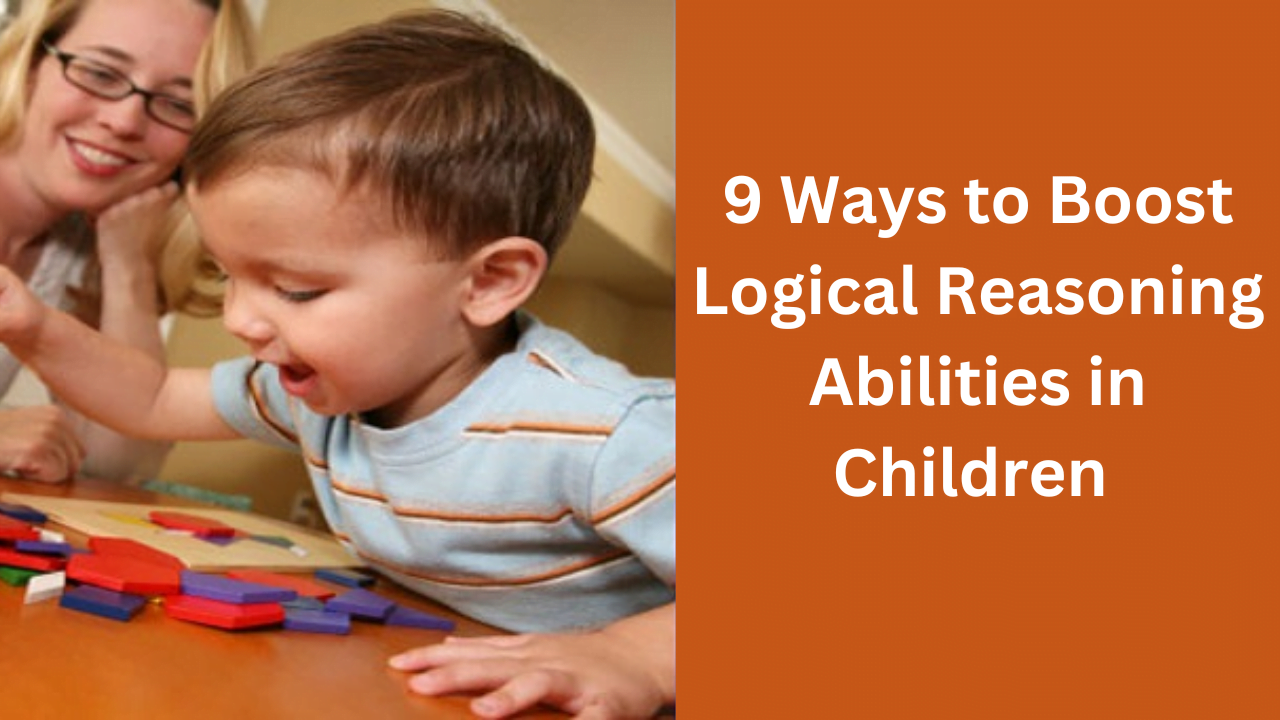
Logical reasoning is like a muscle—when children use it regularly, it gets stronger, faster, and sharper. This skill helps them excel in math, science, reading comprehension, and even social situations. More importantly, it gives them the confidence to solve real-life problems independently.
The best part? You don’t need expensive tools or advanced courses to teach it. Many opportunities are hidden in everyday moments—waiting for you to turn them into fun learning experiences.
Here are 9 realistic, proven strategies to improve Logical Reasoning Abilities in Children, each supported by real-life applications and practical tips for parents.
Strategies to Improve logical reasoning Abilities in children
Make Puzzles and Brain Games a Daily Habit
Puzzles challenge children to identify patterns, think critically, and come up with solutions—key ingredients of logical reasoning.
Real-Life Example:
Set aside 15 minutes after school for puzzle-solving. Start with jigsaw puzzles, then move to Sudoku, crosswords, or tangrams as they progress.

Play “spot the difference” games during breakfast—it’s quick and engages the brain early in the day.
Parent Tip: Create a “Puzzle Box” at home with a mix of board puzzles, printable logic games, and apps like ChessKid or Brainwell. Change puzzles weekly to avoid boredom.
Use Storytelling for Problem Solving
Stories are powerful for developing prediction, sequencing, and inference skills.
Real-Life Example:
Read your child a mystery story and stop just before the big reveal. Ask:
“What do you think happens next? Why?”
Encourage them to explain their reasoning using clues from the story.
Parent Tip: Use bedtime stories to introduce “What if?” scenarios—e.g., “What if the hero didn’t take the shortcut? How would the ending change?”Turn Everyday Math into Logic Lessons
Math builds structure and systematic thinking—essential for reasoning.
Real-Life Example:
At the grocery store, turn shopping into a math game:
“We need 3 boxes of cereal. Each costs $2.50. What will the total be?”
Then, add a twist: “What if we buy 2 more with a 10% discount?”
Parent Tip: Cooking is another great math opportunity—measuring ingredients teaches fractions, ratios, and logical sequencing.
Play Strategy-Based Board Games
Games like Chess, Checkers, Catan, and Scrabble sharpen planning, foresight, and decision-making.
Real-Life Example:
Host a family board game night every Friday. Discuss your strategies openly—this helps kids see how different choices affect outcomes.
Parent Tip: Let children make their own rules for a game occasionally. Then, play it under their rules. This helps them think about structure, fairness, and consequences.
Teach Step-by-Step Thinking
Complex problems become easier when broken into smaller steps.
Real-Life Example:
Ask your child to plan the steps for making a sandwich:- Take two slices of bread
- Spread butter
- Add fillings
- Close sandwich
- Cut in half
Now ask them to reverse the steps or come up with a faster method.
Parent Tip: Use chores like packing school bags or cleaning rooms to teach step-by-step organization.
Ask Open-Ended “Why” & “How” Questions
Open-ended questions encourage analysis rather than guesswork.
Real-Life Example:
If your child says, “It’s cloudy today,” ask:
“Why do you think that means it will rain?”
Guide them to connect observations (dark clouds) with outcomes (rainfall).
Parent Tip: During TV shows or movies, pause and ask, “Why do you think that character made that choice?”Do Simple Science Experiments Together
Hands-on experiments build cause-and-effect understanding.
Real-Life Example:
Create a homemade water filter using sand, pebbles, and cotton. Before starting, ask:
“Which material do you think will clean the water best? Why?”
Advertisement
After testing, compare results with predictions.
Parent Tip: Always let your child guess the outcome before revealing it—this trains hypothesis-based reasoning.

Play Pattern Recognition Games
Patterns form the foundation of reasoning, coding, and problem-solving.
Real-Life Example:
On a car ride, play “Color Pattern” spotting—e.g., red car, blue car, red car, blue car. Then, challenge them to predict the next car color.
Parent Tip: Use household objects for patterns—arrange spoons and forks in a sequence and ask your child to continue it.
Model Logical Thinking Yourself
Children copy what they see. When you make logical decisions out loud, they learn the thought process.
Real-Life Example:
When choosing a grocery checkout line, explain:
“That line has fewer people but each has a full cart. This line has more people but smaller carts, so it might move faster.”
Parent Tip: Include your child in small decision-making moments like planning routes or meal prepping—they’ll naturally start reasoning through choices.
Conclusion
Logical reasoning skills don’t develop overnight—it’s a habit built through consistent exposure to challenging, thought-provoking activities. By weaving reasoning exercises into daily life, you not only improve your child’s academic performance but also prepare them for the complex decisions they’ll face as adults.

Internal Linking Ideas
- Link to Best STEM Activities for Kids at Home
- Link to Top Educational Toys for Boosting Brain Development
- Link to Critical Thinking Exercises for Kids
FAQs
Q1: At what age should I start working on my child’s reasoning skills?
A: You can begin as early as age 3 with simple pattern games and “why” questions.
Q2: Do video games help in reasoning development?
A: Yes, but choose games with puzzles or strategy elements and limit screen time.
Q3: How can I track my child’s progress?
A: Keep a “Logic Journal” to note activities, their difficulty level, and how quickly your child solves them.
Comprehensive 2026 Buyer’s Guide & Additional Insights: 9 Ways to Boost Logical Reasoning Abilities in Children
As the digital landscape evolves, staying informed about 9 ways to boost logical reasoning abilities in children is more critical than ever. Families across the globe are facing unprecedented challenges in managing digital safety, screen time, and psychological well-being. Whether you are dealing with toddlers discovering tablets or teenagers navigating complex social media ecosystems, relying on outdated strategies is no longer sufficient.
Why Premium Solutions Matter
Many parents attempt to solve modern digital problems using free, built-in operating system controls. However, these tools are often inadequate against tech-savvy minors and sophisticated algorithms. When addressing 9 ways to boost logical reasoning abilities in children, investing in enterprise-grade family network security and premium software suites provides a unified, impenetrable defense.
Free tools typically lack deep packet inspection, real-time cyberbullying detection, and comprehensive dark web scanning. Furthermore, some free applications monetize their services by harvesting your family’s behavioral data, directly contradicting your privacy goals.
Top Industry Recommendations
| Recommended Service | Key Benefit | Average Cost |
|---|---|---|
| Aura Family Plan | Unmatched all-in-one protection combining antivirus, VPN, parental controls, and identity theft insurance. | $144/year |
| Norton 360 Deluxe | Industry-standard rapid threat detection and million-dollar stolen funds reimbursement. | $180/year |
| Bark Premium | The absolute best AI-driven social media monitoring for detecting digital threats. | $99/year |
When you evaluate the costs associated with these premium tools, you must factor in the invaluable peace of mind they provide. The financial and emotional toll of a compromised identity or unmonitored digital access far outweighs a nominal annual subscription fee.
Explore Related Resources
For a comprehensive overview of how to protect your family in 2026, be sure to read our Ultimate Guide to Digital Parenting.
Additionally, check out these related articles to further secure your household:
- Family Threat Protection Software: Your Digital Shield
- Language Development Activities for Kids, Teens, and Adults
- 10 Powerful Ways to Enhance Your Endocrine System Health: A Comprehensive Guide

Russell F. Jones, holding a Master in psychology from the University of Florida. He writes for Smart Parent Solutions, offering practical advice on parenting and child development. His engaging content helps parents navigate family life with confidence and ease. Russell enjoys sharing his knowledge and spending quality time with his family.