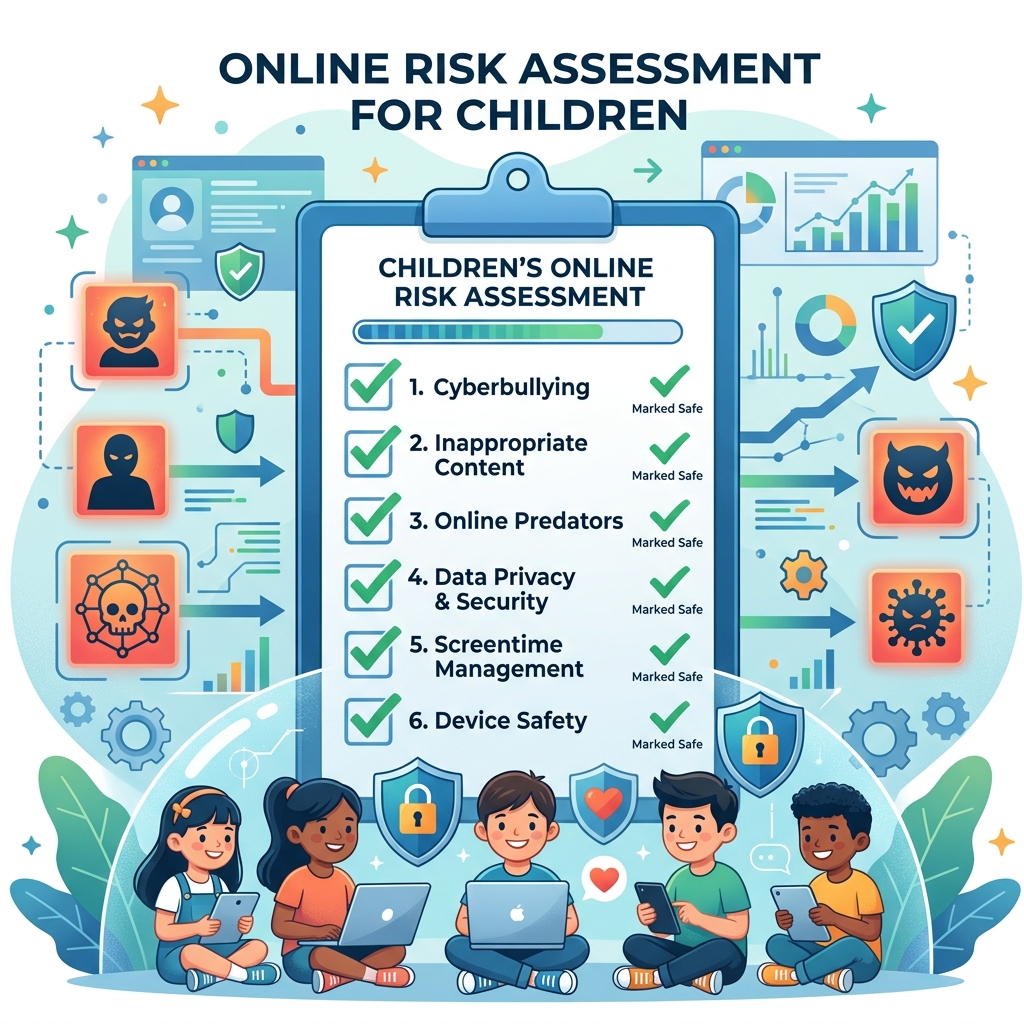
An online risk assessment for children is a structured evaluation process used by parents and educators to identify, analyze, and mitigate the digital dangers a specific child might face based on their age, maturity, and internet habits. Just as parents assess the physical risks before letting a child ride a bike alone, they must assess the digital risks before handing over an unrestricted smartphone.
The internet is not a monolithic entity; a 7-year-old watching curated YouTube Kids faces entirely different threats than a 15-year-old navigating group chats on Snapchat. A personalized risk assessment prevents the common parental mistake of applying either too little protection (resulting in exposure to trauma) or too much restriction (resulting in rebellion).
This guide provides a comprehensive framework for conducting an online risk assessment, helping you tailor your family’s cybersecurity approach to your child’s unique developmental stage.
- An online risk assessment evaluates threats based on the specific apps and devices a child uses.
- The primary risks shift from inappropriate content (for younger kids) to social risks like cyberbullying (for teens).
- Assessments should be repeated annually or whenever a child receives a new device.
- The results of the assessment dictate which family threat protection software to implement.
The Core Components of a Risk Assessment
To conduct a thorough assessment, evaluate your child’s digital life across three primary threat vectors.
1. Content Risks
Content risks involve the child passively consuming harmful material. This includes exposure to pornography, extreme violence, hate speech, or pro-anorexia forums.
Assessment Question: Does my child use unmoderated search engines or platforms with algorithmic video feeds (like TikTok or standard YouTube)? If yes, the risk is High, requiring the implementation of secure browsing for kids.
2. Contact Risks
Contact risks involve the child interacting with others, leading to cyberbullying, online grooming by predators, or extortion (sextortion).
Assessment Question: Does my child play multiplayer games with voice chat (like Roblox or Fortnite) or use private messaging apps? If yes, the risk is High, necessitating the use of cyberbullying monitoring software.
3. Conduct Risks
Conduct risks involve the child’s own behavior negatively impacting their future. This includes oversharing personal data, participating in bullying, or illegal downloading.
Assessment Question: Does my child understand the permanence of the internet and how to manage their digital footprint? If no, the risk is High, requiring immediate education on child digital footprint management.
Age-Based Assessment Framework
Use this general framework to guide your personalized assessment.
| Age Group | Primary Digital Risks | Recommended Mitigation Strategy |
|---|---|---|
| Ages 5 – 9 | Accidental exposure to inappropriate content; clicking on malicious ads (malvertising). | Use “walled garden” browsers; enforce strict network-level DNS filtering; utilize tablet “Kids Modes.” |
| Ages 10 – 13 | Cyberbullying; online grooming in gaming chats; screen addiction. | Implement AI-driven monitoring software (like Bark); establish clear rules for multiplayer gaming. |
| Ages 14 – 17 | Reputation damage (oversharing); sextortion; data privacy breaches. | Transition from monitoring to mentoring; focus on digital footprint education and identity protection. |
Putting the Assessment into Action
Once you have identified the primary risks, you must act. If your assessment reveals high contact risks due to gaming, immediately restrict voice chat settings on the console. If content risks are high, upgrade your home’s router to include DNS filtering. The assessment is only valuable if it leads to the concrete implementation of digital privacy for children.
Conclusion
An online risk assessment for children is a vital tool for modern parenting. By objectively evaluating the content, contact, and conduct risks specific to your child’s digital habits, you can deploy targeted technological solutions and educational conversations that actually work. Schedule time this weekend to sit down, review the apps your child uses most, and conduct your first formal digital risk assessment.
Commercial Buyer’s Guide: Investing in Your Family’s Digital Safety
While education and communication are foundational, they are not enough to stop automated cyber attacks and synthetic identity fraud. To truly secure your household, you must invest in enterprise-grade cybersecurity. When you are ready to purchase online risk assessment for children tools, you need to look beyond free, basic tools and evaluate premium, comprehensive platforms.
Why Free Tools Fail
Free security tools often lack the critical features necessary for modern defense, such as continuous dark web scanning, real-time ransomware protection, and dedicated resolution specialists. Furthermore, free apps frequently monetize your usage by harvesting and selling your family’s data—the exact opposite of what a privacy tool should do.
Top Recommendations for 2026
Based on our extensive testing and independent security audits, here are the top-rated suites on the market:
| Software Suite | Primary Strength | Average Annual Price |
|---|---|---|
| Aura Family Plan | Unmatched all-in-one protection combining antivirus, VPN, parental controls, and identity theft insurance. | $144/year |
| Norton 360 Deluxe with LifeLock | The industry standard for rapid threat detection and million-dollar stolen funds reimbursement. | $180/year |
| Bark Premium | The absolute best AI-driven social media monitoring for detecting cyberbullying and predatory behavior. | $99/year |
When you evaluate the cost of top identity theft protection or premium parental controls, remember that you are purchasing peace of mind. The financial and emotional toll of a compromised identity or a cyberbullying incident far outweighs the annual subscription fee of a premium security suite.
Author Bio: Russell F. Jones holds a Master in Psychology from the University of Florida. He specializes in digital parenting, helping families assess digital risks and implement effective technological boundaries.
Last Updated: June 2026
Frequently Asked Questions
What is an online risk assessment for children?
An online risk assessment is a structured evaluation where parents identify and analyze the specific digital threats (content, contact, and conduct) their child faces based on the apps and devices they use.
How often should I conduct a digital risk assessment?
Assessments should be conducted annually, or immediately whenever a child is given a new internet-connected device, joins a new social media platform, or reaches a new developmental milestone.
What are “contact risks” on the internet?
Contact risks refer to dangers arising from digital interactions with others. This includes cyberbullying from peers, exposure to toxic behavior in multiplayer gaming, and the threat of online grooming by adult predators.
What are “conduct risks” on the internet?
Conduct risks refer to the child’s own harmful behavior online. This includes oversharing sensitive personal information, participating in bullying, sexting, or violating copyright laws by downloading pirated media.
How do I mitigate the risks I find during the assessment?
Risks are mitigated by combining technological solutions (like installing monitoring software or network firewalls) with ongoing education and open communication about digital citizenship and safety.
Comprehensive 2026 Buyer’s Guide & Additional Insights: Online Risk Assessment for Children: Evaluating Digital Threats
As the digital landscape evolves, staying informed about online risk assessment for children: evaluating digital threats is more critical than ever. Families across the globe are facing unprecedented challenges in managing digital safety, screen time, and psychological well-being. Whether you are dealing with toddlers discovering tablets or teenagers navigating complex social media ecosystems, relying on outdated strategies is no longer sufficient.
Why Premium Solutions Matter
Many parents attempt to solve modern digital problems using free, built-in operating system controls. However, these tools are often inadequate against tech-savvy minors and sophisticated algorithms. When addressing online risk assessment for children: evaluating digital threats, investing in enterprise-grade family network security and premium software suites provides a unified, impenetrable defense.
Free tools typically lack deep packet inspection, real-time cyberbullying detection, and comprehensive dark web scanning. Furthermore, some free applications monetize their services by harvesting your family’s behavioral data, directly contradicting your privacy goals.
Top Industry Recommendations
| Recommended Service | Key Benefit | Average Cost |
|---|---|---|
| Aura Family Plan | Unmatched all-in-one protection combining antivirus, VPN, parental controls, and identity theft insurance. | $144/year |
| Norton 360 Deluxe | Industry-standard rapid threat detection and million-dollar stolen funds reimbursement. | $180/year |
| Bark Premium | The absolute best AI-driven social media monitoring for detecting digital threats. | $99/year |
When you evaluate the costs associated with these premium tools, you must factor in the invaluable peace of mind they provide. The financial and emotional toll of a compromised identity or unmonitored digital access far outweighs a nominal annual subscription fee.
Explore More Digital Parenting Resources
For a comprehensive overview of how to protect your family in 2026, be sure to read our Ultimate Guide to Digital Parenting.
Additionally, check out these related guides to further secure your household:
- Family Threat Protection Software: Your Digital Shield
- Family Privacy Management: The Complete 2026 Guide
- Online Reputation Management for Teens: Building a Positive Digital Footprint
